Looking for a spanish teacher who can actually move your speaking, listening, and exam scores — not just assign more worksheets? Whether you are preparing for DELE / AP Spanish, supporting school Spanish, or learning for travel and work, the right 1:1 match matters more than the platform brand name.
This guide walks parents and adult learners through how to evaluate a spanish teacher, what to expect from online lessons, and when a free demo is the smartest next step.
Why “Spanish Teacher” searchers need more than flashcards
Apps and phrase lists build curiosity. Progress usually stalls without structured teaching: pronunciation feedback, graded input, and deliberate speaking practice.
A strong spanish teacher will:
- Diagnose your current level (beginner → intermediate / DELE pathway, or school syllabus)
- Correct mistakes in real time — especially conjugation, listening speed, and conversational fluency
- Balance grammar / reading with conversation so you do not freeze in real situations
- Assign short practice you can finish between sessions
Apps and dictionaries help. A teacher turns passive recognition into usable Spanish.
Spanish Teacher vs spanish tutor: what to look for
People often search both spanish teacher and spanish tutor. In practice, you want someone who can teach — not only chat.
Useful signals:
| Signal | Why it matters |
|---|---|
| Clear lesson plan | You know which unit or exam level you are covering |
| Experience at your level | An advanced tutor may not scaffold absolute beginners well |
| Curriculum awareness | School Spanish, DELE / AP Spanish, university prep, or conversational goals differ |
| Patient correction style | Good teachers wait after asking a question; they do not monopolize talk time |
| Online tools | Shared whiteboard, screen share for textbooks, recording for review |
In markets like the US and Latin America-facing learners, related searches include spanish tutor, spanish language teacher, and private spanish tutor — all pointing to the same need: reliable private spanish language instruction that fits busy schedules.
Online 1:1 spanish lessons: who they work best for
Live 1:1 online is usually best when you:
- Need flexible timing across time zones
- Want feedback on your mistakes (not a group average)
- Are preparing for a deadline (DELE date, school oral, interview)
Group classes can be cheaper and motivating for some learners, but pacing often leaves gaps.
Async homework-only help fixes tonight’s worksheet; it rarely builds speaking fluency unless paired with live review.
For most learners who searched “spanish teacher” because progress stalled, weekly live 1:1 beats irregular marathon sessions.
How to brief your spanish teacher in the first week
Give a short brief so the first sessions are diagnostic, not random:
- 1. Goal — DELE level in six months? School grades? Travel conversation?
- 2. Current level — Can you introduce yourself? Hold a 3-minute chat?
- 3. Pain points — listening speed, conjugations, subjunctive, confidence speaking
- 4. Time budget — Hours per week for lessons + self-study
- 5. Materials — school textbook, AP Spanish packet, or tutor plan
Ask your teacher to explain how they will measure progress after four weeks (mock exam section, recorded speaking sample, or school topic checklist).
Red flags when hiring a spanish teacher
- Guarantees of a specific exam pass with no diagnostic
- Every session is only “free talk” with no correction notes
- No plan for weak spots (grammar, listening, writing, or speaking)
- Pressure to buy a large package before a trial lesson
- Unclear cancellation or replacement policy on platforms
Value-first tip parents use: ask the student to explain today’s Spanish topic without notes. Whatever they cannot explain becomes the teacher brief — concepts and speaking, not just homework answers.
What a good first demo looks like
A useful demo with a spanish teacher typically includes:
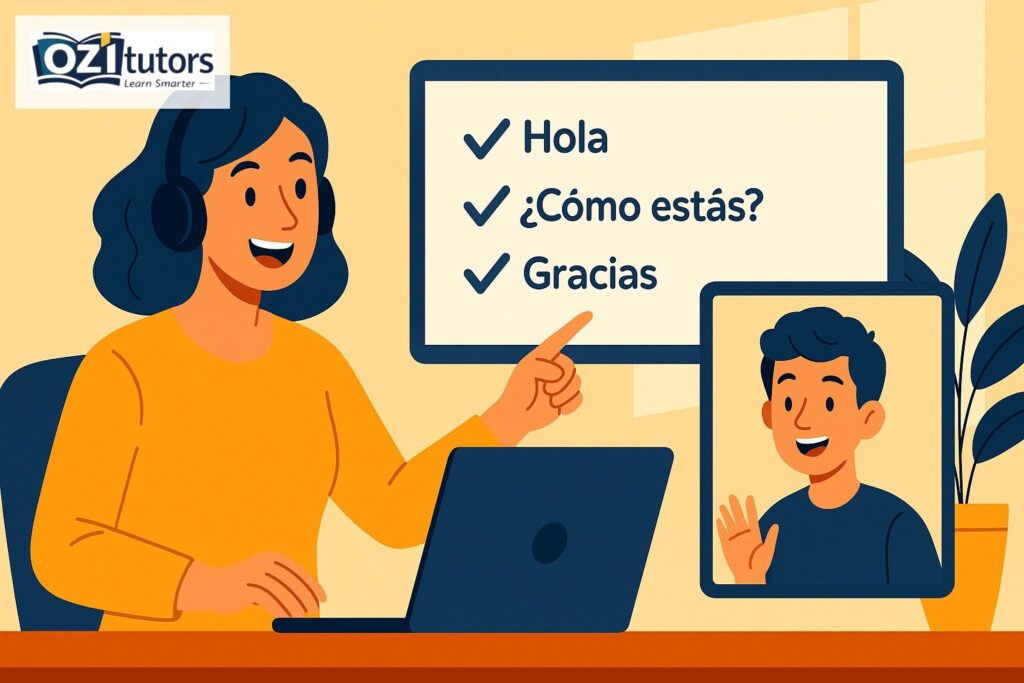
- 5–10 minutes of level check (greetings → simple Q&A → short reading if ready)
- One focused teaching segment (e.g. preterite vs imperfect, or a short dialogue)
- Clear next-step homework (10–20 minutes, not an hour of busywork)
- Honest recommendation: weekly vs biweekly, and whether another tutor specialty fits better
On OziTutors, you can book a free demo with a verified tutor matched by subject and schedule — then decide before committing to a package. Browse matched tutors on OziTutors Spanish tutors.
Frequently asked questions
How often should I take spanish lessons?
Most beginners and intermediates improve with 1–2 live sessions per week plus short daily review (15–20 minutes). Intensive exam prep may need more, but only if you complete practice between sessions.
Do I need a native spanish teacher?
Native speakers help with natural phrasing and listening. Strong teachers who explain clearly in your first language can also excel. Prioritize teaching skill and level fit over nativeness alone.
Can online spanish teachers help with school Spanish?
Yes — if they know your syllabus (or review your textbook and past papers). Share recent quizzes and the next unit so lessons map to school pacing.
Is a spanish teacher better than only using apps?
Apps build vocabulary and habit. A teacher provides spoken correction, accountability, and a path through DELE or school goals. Many learners combine both: app for daily review, teacher for speaking and weak spots.
Next step
If you have been searching for a spanish teacher and comparing private options, start with a diagnostic demo. Clarify your goal, test teaching chemistry, and only then buy a package.